
Pediatric Eye Exams in Stony Plain
Children’s vision can change quickly, and kids often don’t notice when something is off. A comprehensive eye exam helps confirm whether your child is seeing clearly and whether their visual skills are developing as expected.

School Screenings vs. Comprehensive Exams
School screenings can catch some concerns, but they are limited. They do not assess binocular vision, depth perception, or many focusing and coordination issues that can affect comfort and performance. A comprehensive exam gives a fuller picture of how your child’s vision is functioning day to day.
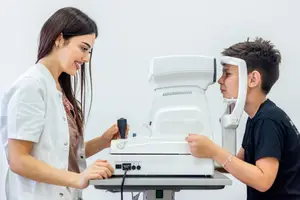
What We Look At During a Pediatric Eye Exam
A pediatric eye exam is more than a sight test. We check how clearly your child sees, how their eyes focus, and how well both eyes work together. We also assess overall eye health in an age-appropriate, calm way.
The Canadian Association of Optometrists recommends:
-
An eye exam between 6 and 9 months
-
At least one eye exam between ages 2 and 5
-
Annual eye exams once children begin school
These visits help us monitor changes over time and keep care consistent as your child grows.
Vision Changes During the School Years
As reading and screen demands increase, vision issues may become more noticeable. If your child is squinting, avoiding near work, complaining of headaches, or struggling to stay comfortable while reading, an exam can help determine whether vision is contributing.
If glasses are needed, we’ll explain the findings clearly and review practical options.

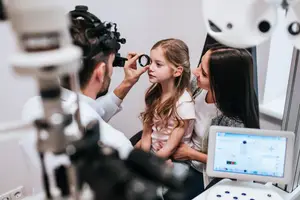
Early Eye Exams Give Your Child the Best Start
Some childhood vision concerns develop gradually and may not be obvious at home or in the classroom. Children often adapt to changes without realizing they are seeing things differently.
Conditions such as amblyopia (lazy eye) and strabismus (eye misalignment) can affect:
-
How the eyes work together
-
Depth perception
-
Long-term visual development
When identified early, these concerns are typically easier to manage. As children grow, the visual system becomes less adaptable, which can limit treatment options.
Regular eye exams allow us to:
-
Monitor visual development over time
-
Detect subtle changes early
-
Address concerns before they begin to affect reading or coordination
Early visits are not about assuming there is a problem; they are about confirming that vision is developing as it should.
Book a Pediatric Eye Exam
To schedule a pediatric eye exam in Stony Plain, contact i-Care Family Vision & Eye Care. We keep visits calm and straightforward, and we take the time to explain results clearly so you know what to do next.