
Glaucoma Testing: Hidden Eye Disease Symptoms
Many people believe they would know if something was wrong with their vision.
After all, blurry vision seems like an obvious warning sign. Yet glaucoma often develops differently. In its early stages, central vision frequently remains clear while subtle vision loss develops around the edges of what you see.
A comprehensive eye exam at I-Care Family Vision & Eye Care can help you take a proactive approach to protecting your sight.
Why Glaucoma Often Goes Unnoticed
Glaucoma is a group of eye diseases that damages the optic nerve, the structure responsible for carrying visual information from the eye to the brain.
Unlike conditions that affect visual sharpness, glaucoma usually affects peripheral vision first. This means you may still read comfortably, recognize faces, and complete daily activities while early damage is occurring.
Because the changes are gradual, many people do not notice them on their own.
Peripheral Vision Loss
Peripheral vision helps you:
- Notice the movement beside you
- Navigate busy environments
- Maintain spatial awareness while driving
- Move safely through familiar spaces
When glaucoma affects peripheral vision, the changes are often subtle enough that the brain adapts before you become aware of them.
How the Brain Fills In Missing Information
The brain does much more than simply receive visual information. It actively interprets and organizes what you see.
When small pieces of visual information are missing, the brain often uses surrounding details to complete the image. Researchers refer to this process as perceptual filling-in.
As glaucoma damages optic nerve fibres, portions of visual information may never reach the brain. Instead of creating obvious blind spots, the brain uses nearby colours, shapes, and patterns to estimate what should be there.
The Optic Nerve: Your Eye's Information Pathway
The optic nerve contains more than a million nerve fibres that transmit visual information to the brain.
In many forms of glaucoma, elevated intraocular pressure can place stress on these fibres. As damage develops, visual information is lost.
Unlike some tissues in the body, damaged optic nerve fibres cannot regenerate. Protecting the health of the optic nerve through early detection remains one of the most important goals of glaucoma care.
Normal-Tension Glaucoma
Some patients develop glaucoma even when eye pressure measurements fall within a normal range. This condition, known as normal-tension glaucoma, highlights the importance of comprehensive eye exams.
Evaluating the optic nerve itself often provides information that pressure measurements alone cannot.
Find Experienced Eye Care in Stony Plain, AB
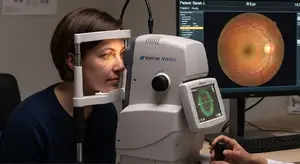
One of the greatest advantages of modern eye care is the ability to identify glaucoma-related damage before noticeable vision loss develops. OCT imaging and visual field testing provide valuable information for early diagnosis, ongoing monitoring, and treatment planning.
At I-Care Family Vision & Eye Care, we evaluate optic nerve health and identify concerns as early as possible. If you are over 40, have diabetes, or have a family history of glaucoma, book an eye exam for insight into your long-term vision health.
FAQs
Can glaucoma develop without blurry vision?
Yes. Glaucoma often affects peripheral vision first while central vision remains clear, particularly during the early stages.
What is peripheral vision loss?
Peripheral vision loss affects your side vision rather than what you see directly in front of you. It often develops gradually and can be difficult to notice without professional testing.
What is an OCT scan?
Optical Coherence Tomography (OCT) is an advanced imaging test that creates detailed images of the optic nerve and retina. It helps detect glaucoma-related damage before noticeable symptoms develop.